March 10 - April 26
Opening Reception: March 10, 6 to 8p.
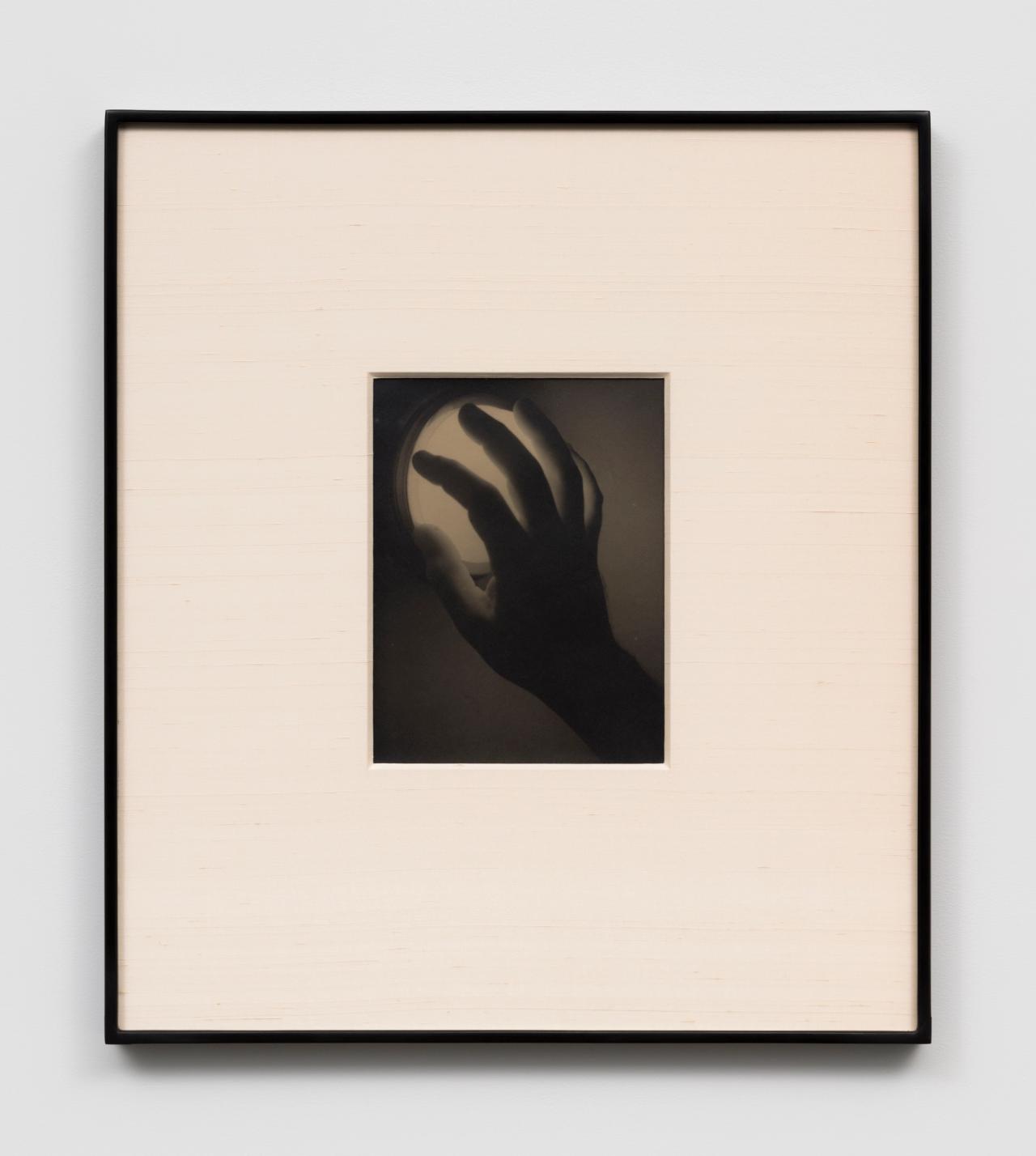
American Art Catalogues presents an exhibition of previously unseen photographs by the Sri Lankan photographer Lionel Wendt. This marks the first solo presentation of his work in the United States and will be accompanied by a forthcoming catalogue with contributions by curator Shanay Jhaveri and artist Tyler Mitchell. This presentation brings together a suite of photographs that Dennis Freedman collected twenty-five years ago during a trip to New Delhi, India from Nalin Tomar and Mahijit Singh.
Born in 1900 in Colombo, Lionel Wendt emerged as a pivotal figure in the cultural life of early twentieth-century Ceylon, now known as Sri Lanka. A member of the Burgher community, a socially prominent group of mixed Sri Lankan and European descents, he was educated at St. Thomas’ College, Mount Lavinia, where he encountered Western intellectual traditions alongside the cultural formations of Ceylon’s indigenous history. In the early 1920s, he travelled to England to pursue formal musical studies at the Royal Academy of Music. There he developed into an accomplished concert pianist, performing a repertoire that ranged from Bach to Bartók and extended to jazz. Immersion in London’s cultural milieu brought him into contact with avant-garde currents in music, literature, and the visual arts, cultivating an intellectual cosmopolitanism that would later inform his role as mentor and catalyst within Sri Lanka’s artistic circles. Upon his return to Ceylon in 1924, he initially concentrated on musical performance, introducing audiences to works previously unheard on the island, before gradually turning to photography as his primary medium.
Attentive to international developments in photography, Wendt integrated formal and technical innovations into his own work. After early experiments with a Rolleiflex camera, he adopted the Leica, whose portability and optical precision corresponded to his evolving aesthetic orientation. From approximately 1933 onward, he printed his own photographs, conceiving the darkroom not merely as a site of reproduction but as a space of conceptual intervention. His bromide and gelatin silver prints are distinguished by nuanced tonal modulation and tactile depth, qualities that confer a pronounced sensuality upon both his nudes and landscapes. Influences ranged from the “straight photography” associated with Paul Strand and Edward Weston to the experimental procedures of Man Ray. Through reproductions encountered in photographic journals, he assimilated and reconfigured techniques such as photograms, photomontage, double exposure, and solarization, at times combining multiple processes within a single composition. In the Hands of the Cutter, for instance, employs solarization to foreground the material operations of photographic production: the artist’s hands are shown cutting negatives, thus inscribing the latent space of the medium into the image itself and aligning the work with Surrealist investigations of reflexivity and apparatus.
Lionel Wendt’s death in 1944, at the age of forty-three, curtailed a career of exceptional curiosity. In the years that followed, a significant portion of his photographic archive was lost: negatives were destroyed and prints dispersed. Consequently, his work receded from public consciousness for several decades, only later to be reassessed as foundational to the development of modernist practice in Sri Lanka.
To request a preview, please contact info@americanartcatalogues.com. For press inquiries, please contact press@americanartcatalogues.com.